Trust & quality
Beware Fake Solar Panels and Inverters in Nigeria: A Buyer's Checklist
Counterfeit panels, relabelled inverters, and warranty traps are rampant in the Nigerian solar market. A 10-point authentication checklist you can run before signing.
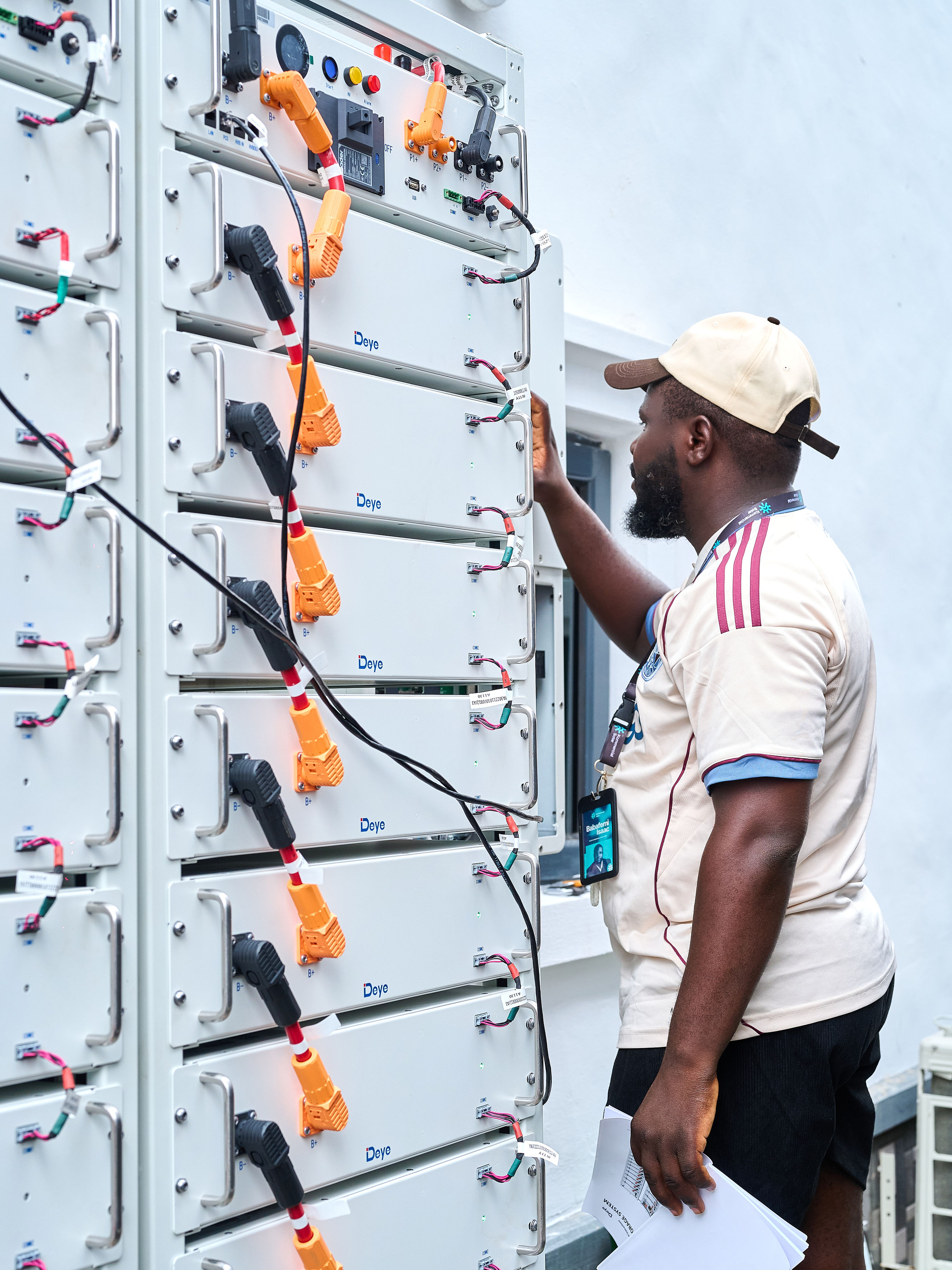
Counterfeit solar panels, relabelled inverters, and misrepresented battery chemistry are an ongoing problem in Nigeria. Most buyers never find out their system is a fake until performance drops at year two or an inverter dies and the “warranty” turns out not to exist. This is a 10-point checklist you can run before signing — on paper, at the warehouse, or on the roof.
The 10-point authentication checklist
- Insist on brand and model on the quote.No quote should read “high-efficiency monocrystalline” without a brand and part number.
- Verify serial numbers on the manufacturer’s portal. Every major panel brand and inverter brand runs an online check. Do it before accepting delivery, not after.
- Match the label on the back of the panel to the datasheet. Wattage, voltage, current, efficiency, and temperature coefficient should all be printed and should match the datasheet exactly.
- Check for Bloomberg Tier-1 or IEC certification marks. A missing or blurry certification mark is a strong counterfeit signal.
- Test wattage under full sun.A clamp meter on the DC side under clear midday sun should land within ~10% of the panel’s rated short-circuit current. A panel reading 70% of that is either counterfeit or badly degraded.
- Confirm battery chemistry on the enclosure.It should say LiFePO4 (lithium iron phosphate), not generic “lithium” or “Li-ion.”
- Register the warranty against your address. Warranty cards left in the reseller’s drawer are not warranties.
- Ask to see the inverter’s firmware version in person.A genuine inverter will show it on the display. A cloned one often can’t.
- Compare the quote against the bill of materials on delivery. The number of panels and the serial numbers should match line for line.
- Insist on a commissioning report. A real installer documents DC and AC voltages, panel orientation, system handover readings, and monitoring credentials.
Red flags during the sale
- Resistance to naming brands until after deposit.
- Discounts that only appear after you push back — a sign margins were hidden somewhere else.
- Verbal warranty promises without written terms.
- Installer refuses to share a sample itemised invoice before you sign.
- No monitoring hardware proposed.
Why Nigerian installers skip these steps
Not always because they’re dishonest — sometimes because the market trained them to compete on sticker price. The margin a proper installer adds is what pays for documentation, warranty registration, and the servicing team you’ll need in year three. A quote without those is cheaper for a reason.
Related reading
- Cost of solar in Nigeria: how a fair quote is built
- Lithium batteries in Nigeria: warranty clauses to insist on
- The Nigerian solar inverter guide
Frequently asked questions
Are fake solar panels really a problem in Nigeria?
Yes. Counterfeit panels, relabelled inverters, and misrepresented wattage are a real and recurring problem in the Nigerian market. The consequences are underperformance, premature failure, and void warranties — often not visible until year 2 or 3.
How can I tell if a solar panel is counterfeit?
Check the serial number against the manufacturer's verification portal, inspect the back-of-panel label for a readable Bloomberg Tier-1 or recognised certification mark, confirm the stated wattage with a clamp-meter test under full sun, and look for consistent anti-counterfeit markings on the frame and junction box.
What about counterfeit inverters?
Relabelled or cloned inverters are harder to spot than fake panels but common. Verify the serial with the manufacturer's online portal, insist on the hard-copy warranty card registered against your installation address, and never accept an inverter whose firmware version can't be shown.
Does buying from a local reseller protect me?
Not automatically. A reputable reseller will happily walk you through the manufacturer's serial verification in front of you. If a reseller resists that step, treat it as a red flag.
What should be in my hands at the end of a legitimate installation?
An itemised invoice with brand, model, and serial of every major component; manufacturer warranty certificates registered against your address; the commissioning report; and system monitoring access. Missing any of these on handover means you don't yet have a legitimate installation.