Buying guide
5kVA Solar System in Nigeria: What It Powers and How to Size It
A 5kVA solar system is the entry point most 3-bedroom Nigerian homes ask about. Appliance-by-appliance load math, panel count, battery sizing, and honest limits of the system.
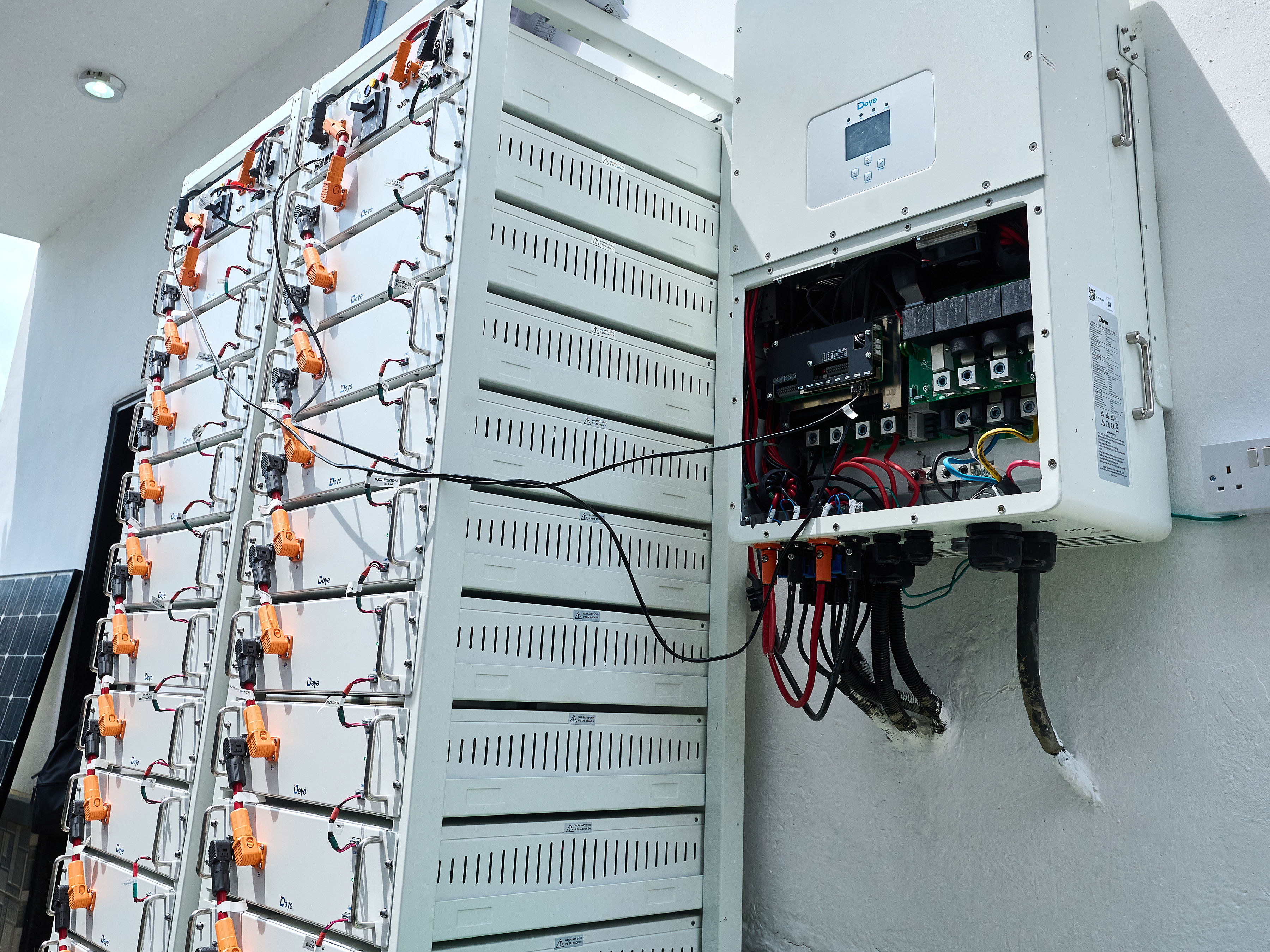
The 5kVA system is the single most common size we get asked about in Nigerian homes. It’s the entry point that fits a 2–3 bedroom lifestyle without overspending. Here’s what it actually powers, how to size the panels and battery that go with it, and the honest limits most installers don’t mention until after you’ve hit them.
What a 5kVA inverter actually means
5kVA is the apparent-power rating of the inverter — roughly 4,000W of continuous usable power on resistive loads (lights, kettles, fridges) and less on high-start-up motor loads. Think of it as the speed limit for your appliances running simultaneously. If the total of every appliance you run at once stays below ~4,000W, you’re comfortable.
Appliance load map: what fits under a 5kVA system
| Appliance | Typical running watts | Notes |
|---|---|---|
| LED bulbs (x 15) | ~150 W | Background all day |
| Ceiling fans (x 4) | ~240 W | |
| Standing fans (x 2) | ~120 W | |
| LED TV + decoder | ~120 W | |
| Fridge (inverter) | ~150 W avg | Cycles on and off |
| Freezer | ~200 W avg | |
| Laptops + phone chargers | ~200 W | |
| 1HP inverter AC | ~900 W | Fits comfortably |
| 1.5HP inverter AC | ~1,200 W | Fits with other loads trimmed |
| Washing machine | ~500 W | Short cycles only |
| Pumping machine | ~1,000 W peak | High start-up current; use schedule |
| Microwave / kettle | ~1,800 W | Short bursts only — don’t stack with AC |
The pattern that works for most 3-bed Nigerian homes on a 5kVA system is: essentials running all day, one AC for a few hours in the evening, high-burst loads (microwave, kettle) scheduled to avoid simultaneous use with the AC.
Panels for a 5kVA system
How many panels you need is driven by daily energy, not inverter rating. For a typical Nigerian home we commonly specify 6–10 panels in the 550W class. Fewer panels mean the system leans more on the grid or the battery; more panels mean faster battery charge on cloudy mornings and more surplus for daytime comfort loads.
Battery for a 5kVA system
- 5 kWh LiFePO4 — covers overnight essentials (fridge, freezer, fans, lights) through the night.
- 7.5 kWh LiFePO4 — adds a few hours of an AC after sunset.
- 10 kWh LiFePO4 — comfortable overnight AC run + buffer for cloudy-day mornings.
See our lithium battery sizing guide for how to pick between them.
Honest limits of a 5kVA system
- Multiple ACs simultaneously is outside its range. Two 1HP ACs at once is at the edge; two 1.5HP ACs needs a bigger inverter.
- Water heaters, cookers, and industrial motors don’t fit. These should stay on the grid/gas.
- Overnight comfort is battery-bound, not inverter-bound. If you want a cold bedroom until morning, size the battery for that — not the inverter.
Related reading
- 10kVA solar system in Nigeria: when to size up
- Lithium batteries in Nigeria: sizing guide
- The Nigerian solar inverter guide
Frequently asked questions
Can a 5kVA solar system run a 3-bedroom home in Lagos?
A 5kVA system can run a typical 3-bedroom home's essentials (lights, fans, fridge, freezer, TVs, phone chargers) plus one 1HP air conditioner for several hours a day. Running multiple ACs simultaneously is outside its capacity — for that you need a 7.5kVA or 10kVA system.
Can a 5kVA solar system run an air conditioner?
Yes — a single 1HP inverter AC, or a 1.5HP inverter AC used cautiously. The limiting factor is usually battery capacity (how long you want to run the AC after sunset), not the inverter rating itself.
How many solar panels does a 5kVA system need in Nigeria?
Typically 6 to 10 solar panels in the 550W class, depending on how much daily energy you need and how much shade the roof has. Fewer panels will run the system but lean more on the battery.
What size battery pairs with a 5kVA inverter in Nigeria?
Most 5kVA Nigerian home installations pair with 5 kWh to 10 kWh of LiFePO4 battery capacity. 5 kWh covers overnight essentials; 10 kWh adds comfort loads like a fan or a few hours of AC.
Can I expand a 5kVA system to 7.5kVA or 10kVA later?
Not directly — the inverter's rating is fixed. But if we design the panel array, cable sizing, and battery bus to the expandable spec, we can swap the inverter in year 2 or 3 without redoing the whole install. Ask for an upgrade path on day one.